An Evening with Elif Shafak in London
Join me for a reflective journey on an unforgettable author talk with Elif Shafak in November 2025. Discover shared themes, personal insights, and a call to explore her remarkable literary world.
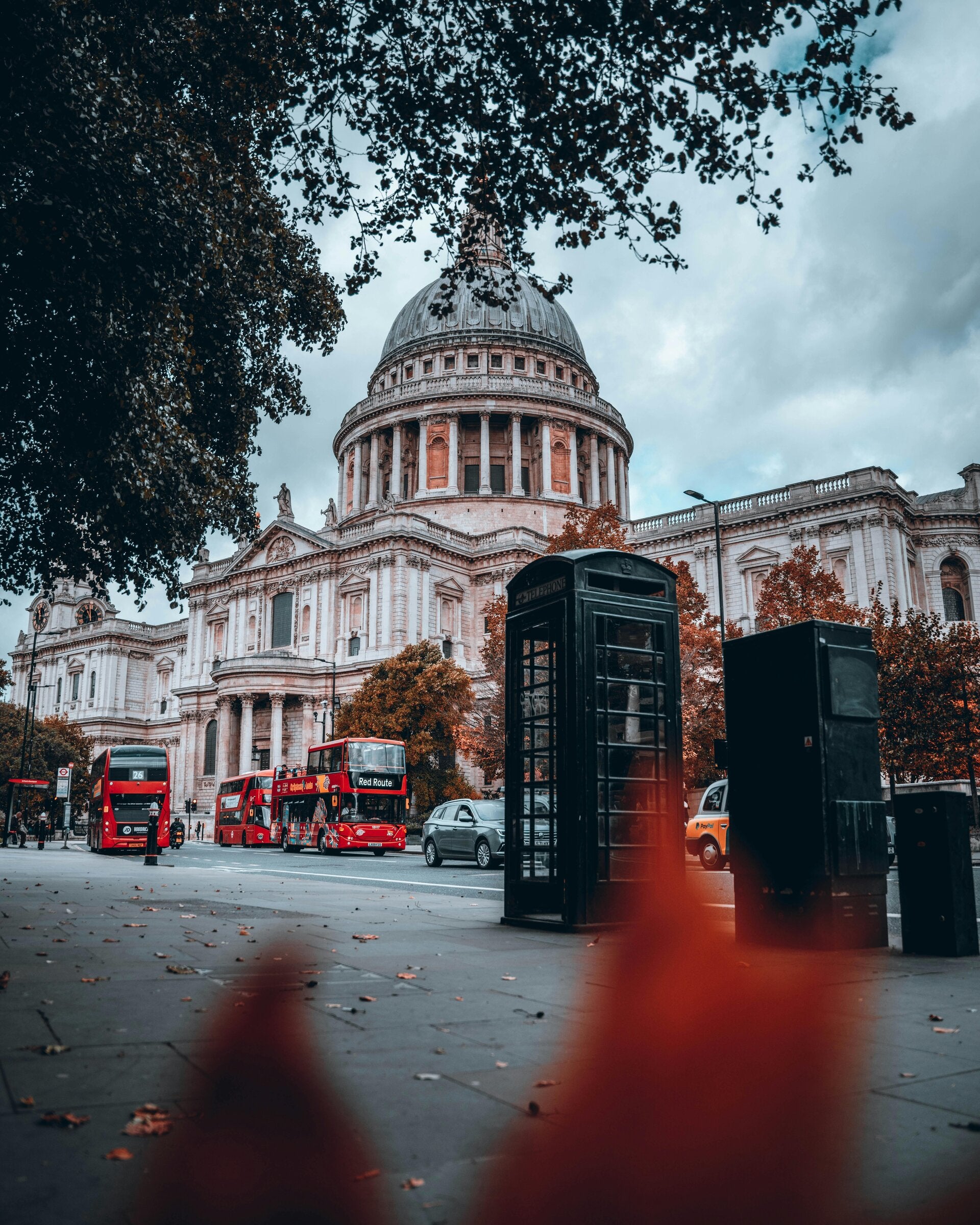
Reflections on an inspiring encounter
The air in St Martin-in-the-Fields was ripe with anticipation. Attending Elif Shafak's author talk that night felt like more than just an event. As she spoke, I found myself nodding in agreement, with a profound sense of connection to her words and the themes she explores. Her insights into storytelling, identity, and the human condition resonated with my own journey.
Elif Shafak was real; soft spoken and slightly tousled, not a polished media product. She looke like a member of her audience. Real. I was caught.
She started with boldness, a reflection, it seemed, of her understanding of my deepest thoughts about myself and my identity in this multiplicitous world. She said, simply, we are living in an age in which we are not encouraged to think about our identity as a multiplicity.
Shafak talks of ripples and concentric circles of experience, describing us as citizens of the world. She rejects the reduction of identity to a single thread and the unfairness of limiting any human being to one label or one fixed identity. She is describing my life, my experience of the complexity of existence. I cannot take refuge in the simplicity of a single identity, a nationality or a simple belonging. I am not a country girl, not a Canadian, not a Brit, not an Indian, not a Muslim, not a Hindu, not a punk, not a teacher, not a pillar of society, not a fearful coward. I am all of these things, and she says it simply. Every human story, she argued, is layered. Even the simplest story contains layers within it. Flexibility is essential.
She suggests that angst is better than apathy, because apathy and giving up are more dangerous and she believes we are witnessing the return of a totalitarian mindset. I nod in agreement, considering Trump, Farage, Ortega, Putin, the Taliban. The list goes on. I If we have entered what she described as an age of pessimism, where is the hope? Democracy, women’s rights, and the environment all feel fragile. These are liquid times, and this instability is not confined to the developing world.
Shafak distinguishes between information and wisdom and warns against the illusion that a little knowledge is enough. We need to slow down. It is time to listen and time to think. Writing, she suggested, taps into something bigger, older, and wiser than ourselves. Art is not a luxury. She compels me, making me feel that what she is doing is bigger, wiser and more necessary. She galvanises her 600-strong audience.
As an answer, Shafak offers three essential forms of connection. The first is human to human connection at the individual level. The second is connection with nature. The third is connection within ourselves, which she described as tending the inner garden. She recalled her grandmother’s words: walk softly, because in April the earth is pregnant.
Fiction, she said, is fact plus emotional intelligence. It is not an escape from fact but something that can bring us closer to truth. Isn’t this what we are striving for?
She describes her childhood as conservative, patriarchal, and inward looking, yet influenced by a progressive thinking grandmother who was wise but uneducated. There is no single path to wisdom and these figures represent an eternal wisdom not linked to a formal education, or an understanding of the status quo, or anything beyond pure common sense. I doubt her, here. The common sense has led us down a path of stupidity, where common sense means the unthinking acceptance of stereotype, of fear, of simple and vicious solutions. Is this right? Or is there a nuance missing? For a moment, I am led into the world of my own thoughts, and Shafak pauses to let us, to let it sink in. To leave us with our thoughts for a moment. This is her mastery.
She emphasised that there is no simple answer to the history of Turkey, the Levant, or the Middle East. These regions are shaped by superstition, myth, and ancient stories. Their complexity is often forgotten. They possess a rich history but also a ruptured memory. An ultra religious imperial memory of glory leaves out the stories of the marginalised, including women, peasants, farmers, and the poor. There are many stories, but there are also many silences.
She refers to what she called “the Armenian lie” and to the enormous loss and destruction of culture that followed. She asks, who is allowed to tell stories and who is prevented from telling them? She doesn’t have the answers, but she also knows there is a multiplicity of answers, all of them valid.
Writing, she explained, chases these questions, nuances, and multiplicities, including the multiplicity of reader experiences and responses. It is not only intellectual engineering; it is also about following intuition and listening to the voices in one’s heart. I am listening, I am here, I am in agreement. She is brave beyond compare in voicing this aloud.
In the face of hatred, Shafak has asked herself whether courage alone is enough and suggested that curiosity may be more powerful. Human beings are story remembering creatures, and our actions are shaped by emotion and experience If we stand for anything, we need to stand for the validity of uncertainty. The extremes of certainty are more dangerous than the unknown. We need intellectual debate that values questioning and listening, rather than fighting to dominate or to win. Emotion driven action should be accompanied by curiosity about the truth and a willingness to listen, to understand, and to revise what we think.
Shafak goes even further, suggesting that linear time may be an illusion. Chronos represents linear time, while kairos represents deep time. What else is there? Personal time? The jumps of time we make in our memories? Stories that flow across generations, and across the lines of our generational memory. She spoke of currents over time and themes that connect people like rivers connecting landscapes. In immigrant families, older people often become the memory keepers. The second generation may not always show interest, but the third generation often begins asking questions and becomes the new memory keeper. In doing so, they may also become healers of generational trauma, exploring the long term effects of turbulent times.
Like Shafak, I think creativity in a time of chaos requires a deep need to slow down and reconnect with one another and with ideas, to cherish links across generations and to hone and promote the global storylines that form a sisterhood. However, Shafak stressed that women cannot build this in isolation. We must also connect with young men, especially those who are disadvantaged, and build connections across divides. By now, I am nodding vigorously. I agree, I agree, I want to sit down and talk with her myself. To explore the nature of childhood, of aging, of the damage of experience and how we write the next chapter in our own stories as well as the bigger story, the biggest, with the most impact.
Children, she said, are naturally poets, writers, and artists. Over time, an external critical voice is internalised, telling us that we are not good enough and killing that early confidence. We must resist absorbing external anxieties. We must keep writing, remain in the imaginary zone, live with our characters, and postpone worry. We must continue despite difficult external circumstances.
She described partition as a hard line that is delicate and sensitive for all involved and spoke of destruction carried out in the name of ideology.She called for honest conversations and for space to allow failure and even to embrace it. A toxic identity that promises certainty in an uncertain world is harmful. She described the writer as a cultural archaeologist who decides which silences to break and what has been buried. I briefly ponder the great divide of the partitions in my own story. Home, connection, portability, distance, exile, and belonging. Writers may hold multiple attachments and multiple storylines. We must insist on the freedom to explore beyond the box or stereotype imposed upon us.
She ends by asking simply, what is lost and buried in the riverbed? In the river of my story, the water flows deep, swift and cold. The mud at the bottom is full of riches. I am grateful to Shafak for providing some of the tools to find them, and the encouragement that the effort will be worth it.
Create Your Own Website With Webador